


- 2/10/11
- 3,379
- 337
[PC]Total War™: ROME II

- Total War™: ROME II
Title: Total War™: ROME II
Genre: Strategy
Developer: Creative Assembly
Publisher: Sega
Release Date: 3 Sep 2013
Languages: English*, German*, French*, Italian*, Spanish*, Russian*, Polish, Czech
*languages with full audio support.
How far will you go for Rome?
The award-winning Total War series returns to Rome, setting a brand new quality benchmark for Strategy gaming. Become the world’s first superpower and command the Ancient world’s most incredible war machine. Dominate your enemies by military, economic and political means. Your ascension will bring both admiration and jealousy, even from your closest allies.
Will you suffer betrayal or will you be the first to turn on old friends? Will you fight to save the Republic, or plot to rule alone as Emperor?
- Plan your conquest of the known world in a massive sandbox turn-based campaign mode (supporting additional 2-player cooperative & competitive modes). Conspiracies, politics, intrigue, revolts, loyalty, honour, ambition, betrayal. Your decisions will write your own story.
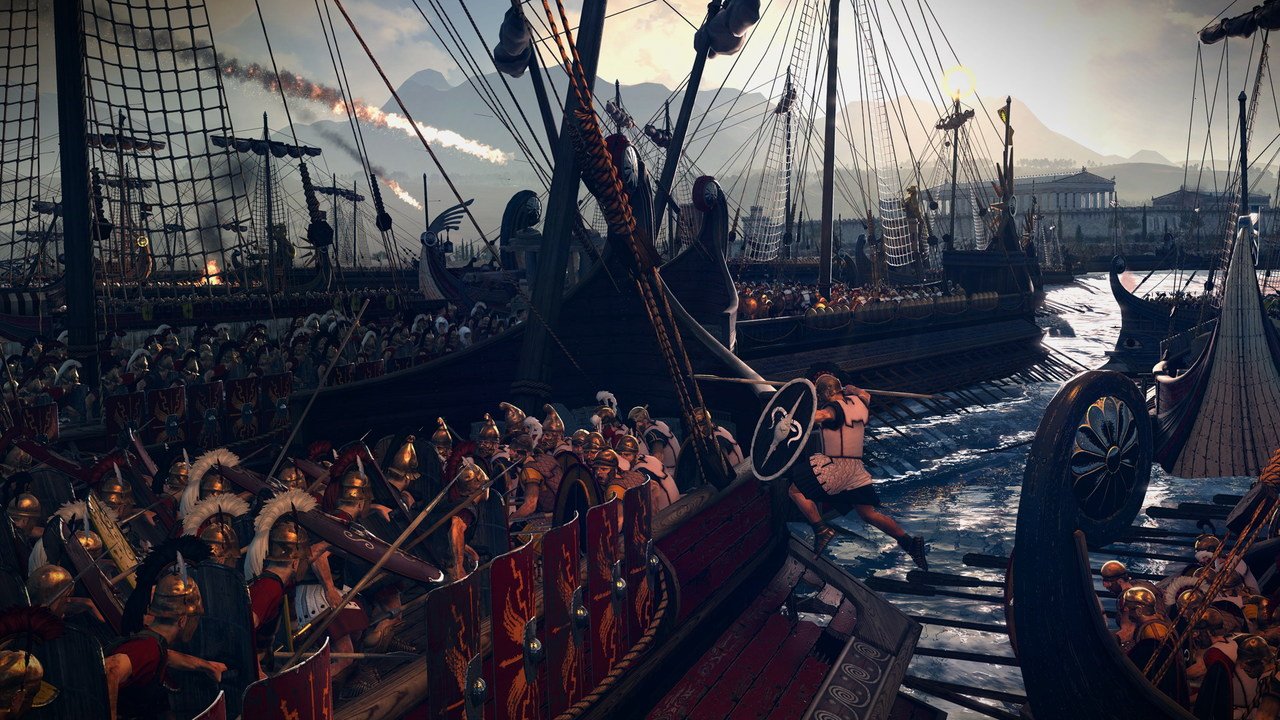
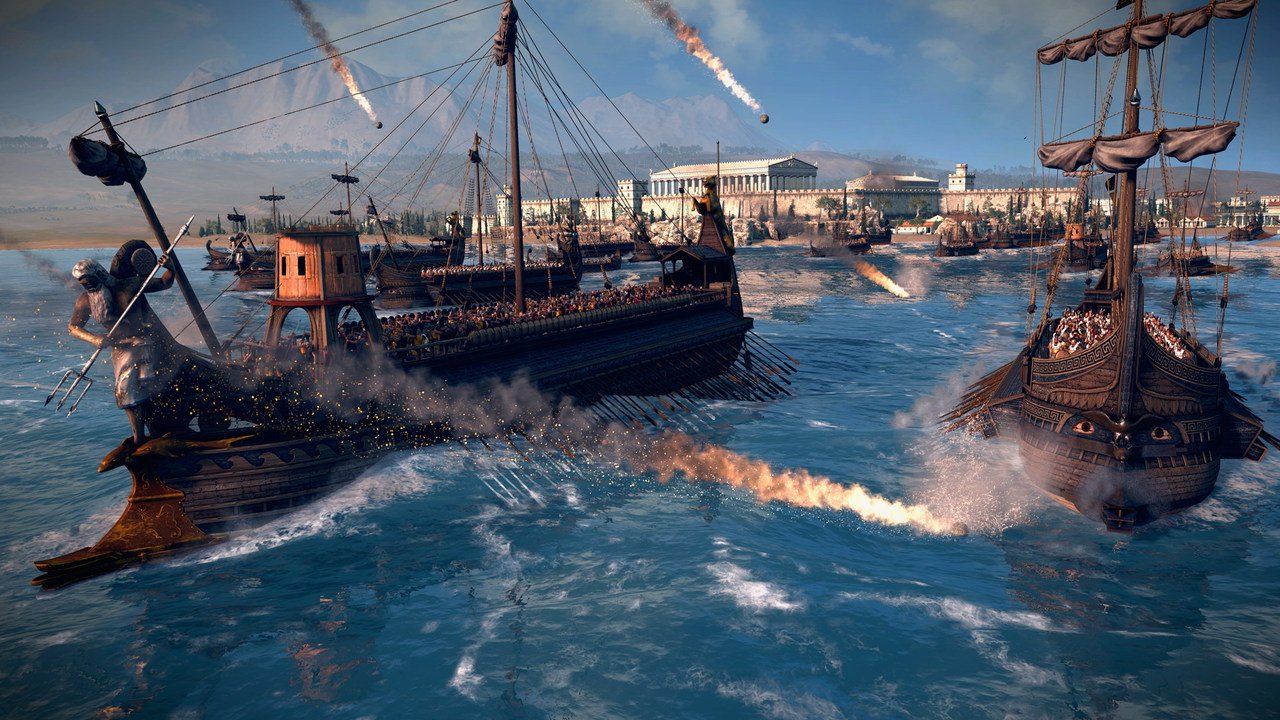
- Build vast armies and take to the battlefield in real-time combat mode. Put your tactical skills to the test as you directly control tens of thousands of men clashing in epic land and sea battles.
- Play for the glory of Rome as one of three families or take command of a huge variety of rival civilisations – each offers a notably different form of gameplay experience with hundreds of unique units from siege engines and heavy cavalry to steel-plated legionaries and barbarian berserkers.
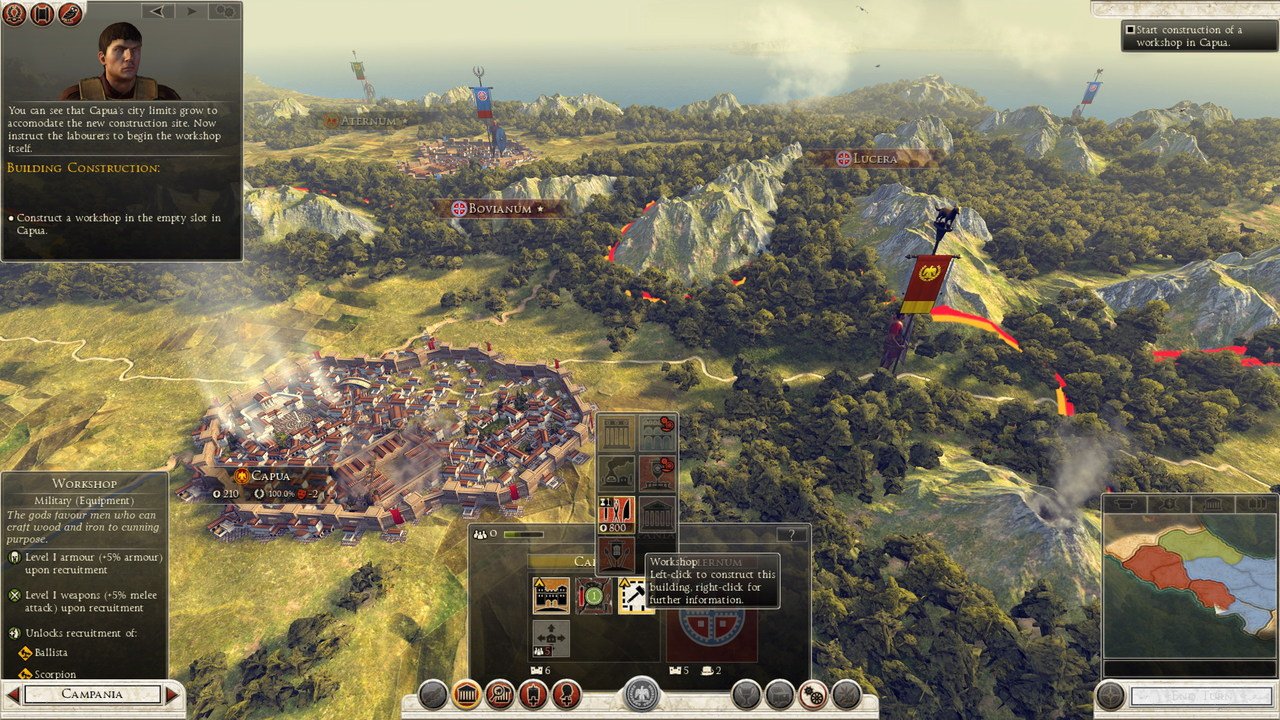
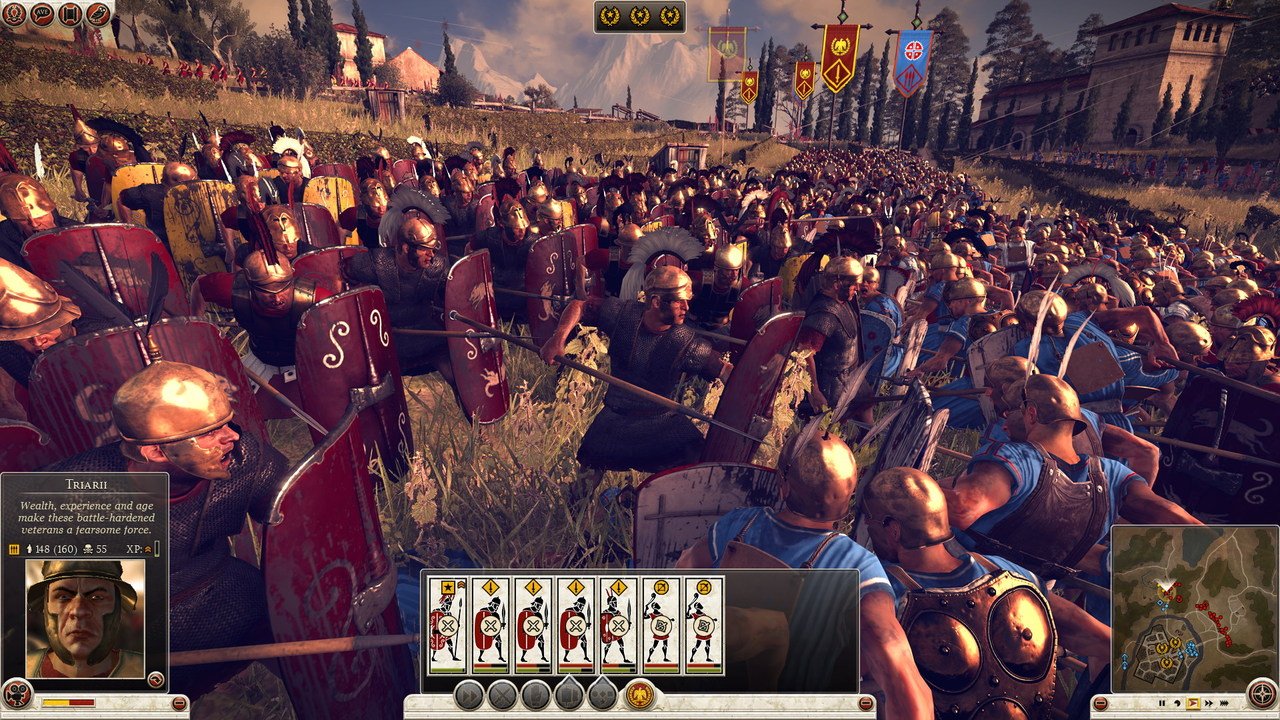
- See exotic ancient cities and colossal armies rendered in incredible detail, as jaw-dropping battles unfold. Detailed camera perspectives allow you to see your men shout in victory or scream in pain on the frontline, while a new tactical cam allows a god’s eye view of the carnage to better inform your strategic decisions.
- Extremely scalable experience, with gameplay and graphics performance optimised to match low and high-end hardware alike.
- System Requirements
Minimum:
OS: XP/ Vista / Windows 7 / Windows 8
Processor:2 GHz Intel Dual Core processor / 2.6 GHz Intel Single Core processor
Memory:2GB RAM
Graphics:512 MB DirectX 9.0c compatible card (shader model 3, vertex texture fetch support).
DirectX®:9.0c
Hard Drive:35 GB HD space
Additional:Screen Resolution - 1024x768.
Recommended:
OS:Windows 7 / Windows 8
Processor:2nd Generation Intel Core i5 processor (or greater)
Memory:4GB RAM
Graphics:1024 MB DirectX 11 compatible graphics card.
DirectX®:11
Hard Drive:35 GB HD space
Additional:Screen Resolution - 1920x1080.
Title: Total War™: ROME II
Genre: Strategy
Developer: Creative Assembly
Publisher: Sega
Release Date: 3 Sep 2013
Languages: English*, German*, French*, Italian*, Spanish*, Russian*, Polish, Czech
*languages with full audio support.
How far will you go for Rome?
The award-winning Total War series returns to Rome, setting a brand new quality benchmark for Strategy gaming. Become the world’s first superpower and command the Ancient world’s most incredible war machine. Dominate your enemies by military, economic and political means. Your ascension will bring both admiration and jealousy, even from your closest allies.
Will you suffer betrayal or will you be the first to turn on old friends? Will you fight to save the Republic, or plot to rule alone as Emperor?
- Plan your conquest of the known world in a massive sandbox turn-based campaign mode (supporting additional 2-player cooperative & competitive modes). Conspiracies, politics, intrigue, revolts, loyalty, honour, ambition, betrayal. Your decisions will write your own story.
- Build vast armies and take to the battlefield in real-time combat mode. Put your tactical skills to the test as you directly control tens of thousands of men clashing in epic land and sea battles.
- Play for the glory of Rome as one of three families or take command of a huge variety of rival civilisations – each offers a notably different form of gameplay experience with hundreds of unique units from siege engines and heavy cavalry to steel-plated legionaries and barbarian berserkers.
- See exotic ancient cities and colossal armies rendered in incredible detail, as jaw-dropping battles unfold. Detailed camera perspectives allow you to see your men shout in victory or scream in pain on the frontline, while a new tactical cam allows a god’s eye view of the carnage to better inform your strategic decisions.
- Extremely scalable experience, with gameplay and graphics performance optimised to match low and high-end hardware alike.
- System Requirements
Minimum:
OS: XP/ Vista / Windows 7 / Windows 8
Processor:2 GHz Intel Dual Core processor / 2.6 GHz Intel Single Core processor
Memory:2GB RAM
Graphics:512 MB DirectX 9.0c compatible card (shader model 3, vertex texture fetch support).
DirectX®:9.0c
Hard Drive:35 GB HD space
Additional:Screen Resolution - 1024x768.
Recommended:
OS:Windows 7 / Windows 8
Processor:2nd Generation Intel Core i5 processor (or greater)
Memory:4GB RAM
Graphics:1024 MB DirectX 11 compatible graphics card.
DirectX®:11
Hard Drive:35 GB HD space
Additional:Screen Resolution - 1920x1080.
- Total War™: ROME II Live Trailer:
https://www.youtube.com/watch?v=7zYgozQ1zpk
- Total War™: ROME II - First gameplay footage:
https://www.youtube.com/watch?v=1OHV628oGiU
- Total War™: ROME II - The Battle of Teutoburg Forest:
https://www.youtube.com/watch?v=7fqb3cPPfuM
- Total War™: ROME II - Greek States Culture Pack:
http://www.youtube.com/watch?v=3KsQtH1gsCo
- Total War™: ROME II - Cleopatra:
https://www.youtube.com/watch?v=_zQIFpmdPDc
- Total War™: ROME II - Find A Way:
https://www.youtube.com/watch?v=aWZCfdDW4NQ
- Total War™: ROME II - Nomadic Tribes Culture Pack:
https://www.youtube.com/watch?v=Zl-csVA7bM0
- Total War™: ROME II - Blood & Gore DLC:
http://www.youtube.com/watch?v=_2yMWHGh9lw&feature=c4-overview&list=UUugJq15BiB-c1NDYPHiznWQ
- Total War™: ROME II - Caesar in Gaul Campaign Pack:
http://www.youtube.com/watch?v=kSU1aWtgGew
- Total War™: ROME II - Beasts of War Pack:
http://www.youtube.com/watch?v=o6oe3WJL4Qw
- Total War™: ROME II – Hannibal at the Gates:
https://www.youtube.com/watch?v=MM5qUVV7gh8
- Total War™: ROME II – Pirates and Raiders Culture Pack:
https://www.youtube.com/watch?v=oqdTe2Y_uM8
- Total War™: ROME II - Daughters of Mars Pack:
https://www.youtube.com/watch?v=7fWVthMjnok&list=UUugJq15BiB-c1NDYPHiznWQ
- Total War™: ROME II - Imperator Augustus Campaign Pack:
- Total War™: ROME II - Black Sea Colonies Culture Pack:
- Total War™: ROME II - Wrath of Sparta Campaign Pack:
https://www.youtube.com/watch?v=7zYgozQ1zpk
- Total War™: ROME II - First gameplay footage:
https://www.youtube.com/watch?v=1OHV628oGiU
- Total War™: ROME II - The Battle of Teutoburg Forest:
https://www.youtube.com/watch?v=7fqb3cPPfuM
- Total War™: ROME II - Greek States Culture Pack:
http://www.youtube.com/watch?v=3KsQtH1gsCo
- Total War™: ROME II - Cleopatra:
https://www.youtube.com/watch?v=_zQIFpmdPDc
- Total War™: ROME II - Find A Way:
https://www.youtube.com/watch?v=aWZCfdDW4NQ
- Total War™: ROME II - Nomadic Tribes Culture Pack:
https://www.youtube.com/watch?v=Zl-csVA7bM0
- Total War™: ROME II - Blood & Gore DLC:
http://www.youtube.com/watch?v=_2yMWHGh9lw&feature=c4-overview&list=UUugJq15BiB-c1NDYPHiznWQ
- Total War™: ROME II - Caesar in Gaul Campaign Pack:
http://www.youtube.com/watch?v=kSU1aWtgGew
- Total War™: ROME II - Beasts of War Pack:
http://www.youtube.com/watch?v=o6oe3WJL4Qw
- Total War™: ROME II – Hannibal at the Gates:
https://www.youtube.com/watch?v=MM5qUVV7gh8
- Total War™: ROME II – Pirates and Raiders Culture Pack:
https://www.youtube.com/watch?v=oqdTe2Y_uM8
- Total War™: ROME II - Daughters of Mars Pack:
https://www.youtube.com/watch?v=7fWVthMjnok&list=UUugJq15BiB-c1NDYPHiznWQ
- Total War™: ROME II - Imperator Augustus Campaign Pack:
- Total War™: ROME II - Black Sea Colonies Culture Pack:
- Total War™: ROME II - Wrath of Sparta Campaign Pack:

- DLC Greek States Culture Pack - Version 1.0.0 build 6798:

The Greek States Culture Pack adds a new playable Culture including three new playable Factions to Total War: ROME II; for use in Single or Multiplayer Campaign modes and Custom and Multiplayer Battles.
The Greek States Culture Pack adds diplomatic Athens, shrewd Epirus and formidable Sparta as playable factions. Each offers range of special tactics to achieve cultural and martial victories, and lethal elite units to crush foes in battle.
The Greek States share a number of common goals, philosophies and general diplomatic aims. However, they are defined by their fierce independence and between them demonstrate a huge variety in approach to civil and military challenges that often brings them into conflict with the wider world, and each other.
DLC informations:
- DLC Nomadic Tribes Culture Pack - Version 1.5.0 build 7765:
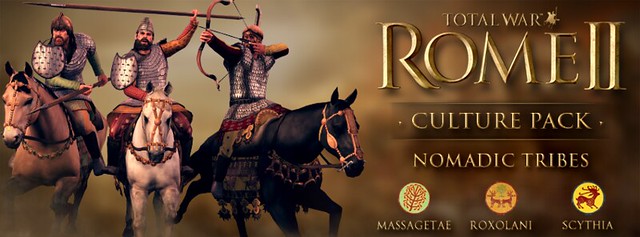
The Nomadic Tribes Culture Pack adds a new playable culture comprising three new playable Factions to Total War: ROME II, for use in Single or Multiplayer Campaign modes and Custom and Multiplayer battles.
The Nomadic Tribes Culture Pack enables ROME II players to take on the ancient world as the ruthless Roxolani, the independent Massagetae and the proud Royal Scythians. Accomplished raiders and legendary horsemen, the Nomadic Tribes are poised to sweep from the steppes and strike at the soft, sedentary targets of more established empires.
Defined by their independence, their excellence on horseback and their ability to swiftly assemble large armies, The Nomadic Tribes bring an entirely new cultural flavour to ROME II.
DLC informations:
- DLC Total War: ROME II - Blood & Gore - Version 1.6.0 build 8013:
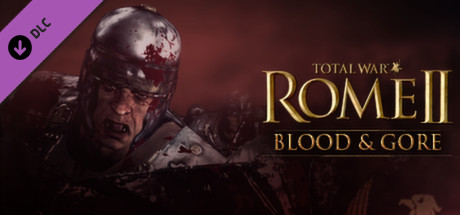
Experience the violent horror of the ancient world battlefield with Total War: ROME II Blood & Gore DLC.
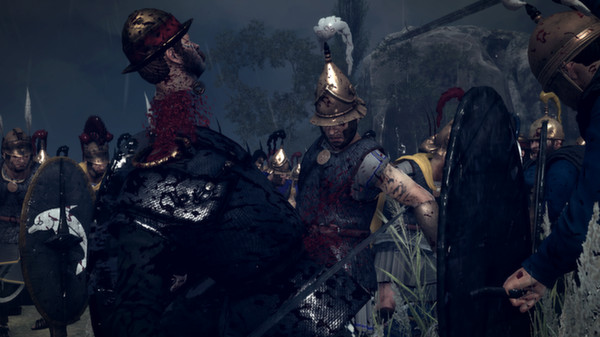
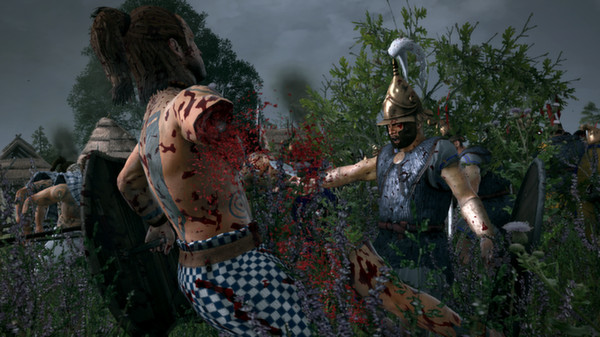
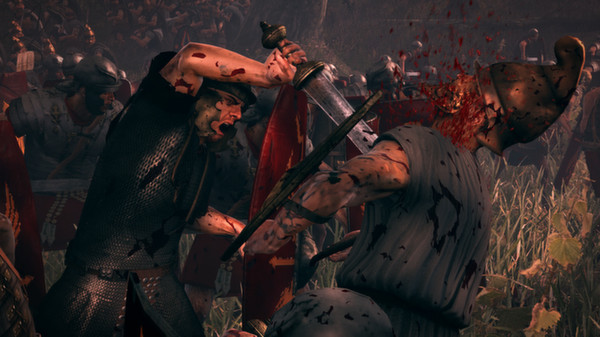
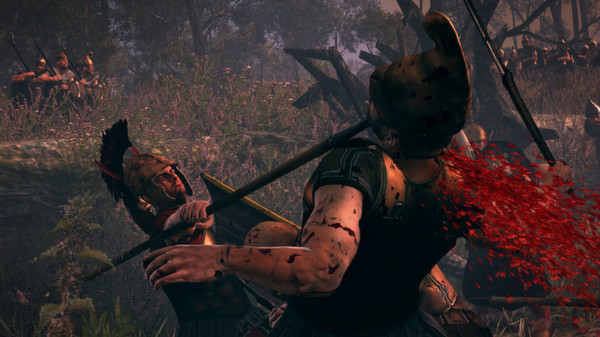
Blood & Gore brings the savagery of front-line combat to viscera-splattering life with decapitations, dismemberment and devastating impalements. Featuring hundreds of gruesome animations that play out in combat between multiple different unit types, the massed battles of Total War: ROME II will never be the same again.
Employing a more refined particle system than Shogun 2, Blood & Gore for ROME II looks and feels grittier and more brutal. Gore coats combatants, the ground will become soaked with blood, and you’ll hear every stab, slash and impact with bespoke new sound effects.
Blood & Gore features new visual and sound effects including:
• New blood-spattered front end
• Graphics option for turning on/off blood
• Blood VFX on arrow/pilum/javelin impacts
• Blood VFX on rock/stone impacts
• Blood VFX on death animations
• Blood shader on death animations and attackers
• Decapitation on selected death animations
• Dismemberment on selected death animations
• Blood decals on terrain
• Sound effects for all blood animations
Additional Minimum System Requirement:
Note that the Unit Detail option in the graphics setting menu must be set to Medium or above in order for dismemberment effects to be seen. Blood effects will display at all settings.
Cảnh báo hình ảnh 18+:
- DLC Campaign Pack Caesar in Gaul - Version 1.8.0 build 8891:
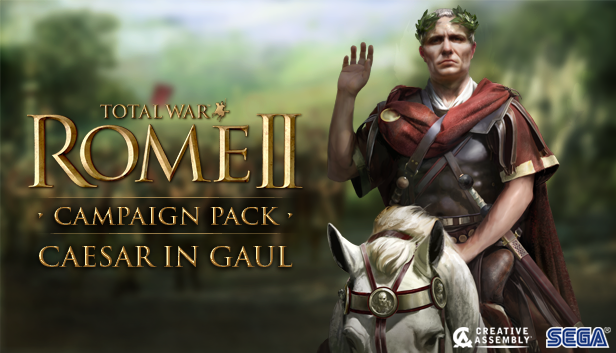
Caesar in Gaul is a standalone campaign pack for Total War: ROME II covering Julius Caesar’s war of expansion against the Gaulish tribes. Players can choose from four playable factions in this conflict: the Gallic Arverni, the Germanic Suebi, the Belgic Nervii and Rome, in a campaign inspired by Caesar’s Commentarii de bello Gallico (Commentaries on the Gallic war).
Offering a tighter scope in terms of time and geography than Rome II (58-51BC), the Caesar in Gaul Campaign Map is an expanded, more detailed vision of Gaul and the south coast of Britannia.
Compared with ROME II’s map of Gaul, Caesar in Gaul contains more regions and provinces, more factions (both playable and non-playable), and a series of famous generals and statesmen from history which the player will employ or fight against depending on their chosen faction.
A war of great profit and glory for Caesar, this conflict made him extremely popular with the people of Rome… though less so with the senators, who saw him gathering power to himself in a series of events that ultimately lead to his ascension to Dictator.
DLC informations:
- DLC Total War: ROME II - Beasts of War - Version 1.11.0 build 10383:
DLC informations:
- DLC Campaign Pack Hannibal at the Gates - Version 1.11.0 build 10383:
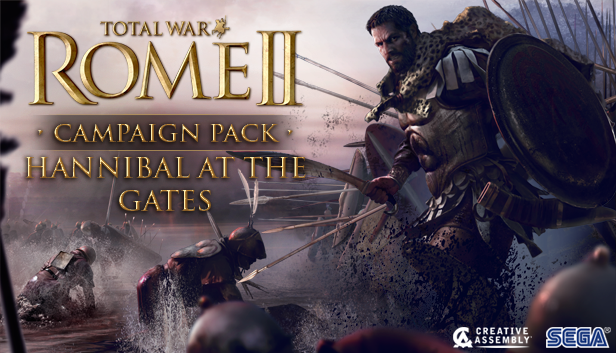
Dropping you into the Western Mediterranean at the outbreak of the 2nd Punic War, Hannibal at the Gates features a new campaign map focused on the period that brought the ancient-world superpowers of Rome and Carthage to all-out war.
One of the most famous in history, the conflict demonstrated the tactical genius of great rival generals Scipio and Hannibal. Can you recreate their remarkable strategies, or can you do better? How will you change history?
You enter the war as Carthage or Rome, command the noble Hellenic city-state of Syracuse, or, for the first time in ROME II, play an Iberian faction as the Arevaci or the Lusitani.
DLC informations:
- DLC Pirates & Raiders Culture Pack - Version 1.13.0 build 11359
- DLC Daughters of Mars Unit Pack - Version 1.14.1 build 13180
- DLC Campaign Pack Imperator Augustus - Version 2.0.0 build 10383
- DLC Black Sea Colonies Culture Pack - Version 2.1.0 build 15239
- DLC Campaign Pack Wrath of Sparta - Version v2.2.0-15539
- DLC Empire Divided - Version v?.?.?-?????
- DLC Desert Kingdoms Culture Pack - Version v?.?.?-?????
The Greek States Culture Pack adds a new playable Culture including three new playable Factions to Total War: ROME II; for use in Single or Multiplayer Campaign modes and Custom and Multiplayer Battles.
The Greek States Culture Pack adds diplomatic Athens, shrewd Epirus and formidable Sparta as playable factions. Each offers range of special tactics to achieve cultural and martial victories, and lethal elite units to crush foes in battle.
The Greek States share a number of common goals, philosophies and general diplomatic aims. However, they are defined by their fierce independence and between them demonstrate a huge variety in approach to civil and military challenges that often brings them into conflict with the wider world, and each other.
DLC informations:
+ New Features:
- New Playable Factions – Athens, Epirus and Sparta each offer a unique new way to experience the campaign, with their own rosters of powerful military units, distinct traits and play styles.
The Athenian pursuit of enlightenment grants them technological and cultural bonuses; Sparta’s dominance over the Helots allows them to maintain a larger slave population; and Epirus enjoys bonuses to settlement exploitation stemming from their village-confederation origins.
- New Cultural Traits – All Greek States benefit from a bonus in battle when defending their own or an allied territory, a bonus to wealth generated by their capitals and an increase to the rate of cultural conversion within their borders.
- New Cultural Objectives – Greek States have their own new set of military, economic and cultural victory conditions, as well as sharing a unique set of bonus objectives drawn from Greek history. Additionally, each faction will have to contend with its unique events and dilemmas.
- New Military Traditions – Each of the Greek States has a unique top-tier military tradition: Athenian fleets may be honoured as Children of the Aegaean, improving the ramming ability of their ships whilst allowing them to secure more income when raiding; Spartan armies may be remembered as Peers of Leonidas, improving their melee defense capabilities and reducing their upkeep; the armies of Epirus may be feared as Hounds of Molossus, granting them greater charge bonuses whilst allowing them to keep public order problems in check.
+ New Units:
In addition to the intimidating unit rosters of each faction now playable for the first time, the Greek States Culture Pack introduces a variety of unique and especially elite and deadly forces.
- Mercenary Veteran Hoplites – [available to all playable factions]
From glistening spear points to earth-shaking tread, a phalanx is a sight and sound to inspire dread. With these veteran hoplites, that dread is sold to the highest bidder.
- Thureos Hoplites – [Unique to Athens]
While the linen breastplates worn by these men may look flimsy, they are cool, practical and surprisingly tough. As with all hoplites, the men inside are also practical and tough warriors.
- Thorax Hoplites – [Unique to Athens]
These heavy hoplites are marked by their bronze breastplate armour, a sign of wealth and status. They are armed with spears and hoplon shields, and use the phalanx formation to batter enemies into submission.
- Agrianian Axemen – [Unique to Epirus and Macedon]
The Paeonian tribe of Agrianes are fierce fighters. As well as terrible killing tools, their axes are also climbing hooks for rough terrain. No sensible general would not use them in an assault.
- Aspis Companion Cavalry – [Unique to Epirus and Macedon]
A king’s companions in battle are his nobles and esteemed friends. It is an honour to be a companion, to ride forth with javelin and kopis to fight for your lord and master.
- Heroes of Sparta – [Unique to Sparta]
Embodying the spirit of Thermopylae, the Heroes Of Sparta bear their spears and shields with fierce pride and unrivalled mastery.
- Polybolos Repeating Scorpion – [Siege Deployable available to all Greek, Roman and Carthaginian factions]
Able to make short work of even the most heavily-armoured opponents, this repeating bolt thrower sacrifices the ordinary Scorpion’s range in return for a rapid rate of fire.
- Tortoise Armoured Battering Ram – [Siege Deployable available to all Greek, Roman and Carthaginian factions]
Combining devastating ramming power while affording protection to its crew, used well the Tortoise more than makes up for its lack of speed and manoeuvrability in open ground.
+ New Buildings:
- The Monument of Lacedaemon – [Unique to Sparta]
A symbol of Sparta’s overridingly martial culture, The Monument of Lacedaemon brings cost reductions to military recruitment, significantly increases the morale of land units in the province and a global morale boost to existing units.
- Oracle of Dodona – [Unique to Epirus]
This sacred grove is the domain of the priests and priestesses of Epirus. The Oracle of Dodona increases city growth, provincial happiness, wealth, and the global conversion of other factions to Hellenic culture.
- Acropolis – [Unique to Athens]
A symbol of Athenian high culture and engineering excellence, The Acropolis also provides extra garrison forces to Athens, improves the city’s abilities to withstand sieges, and increases Athenian agents’ Authority actions.
Faction History:
- Athens
Athens has long been famed for its cultural achievements, from buildings such as the Parthenon, to the plays and works of Aristophanes, Plato, Socrates, and Sophocles. In many ways, Greek culture is defined by Athens. Its military focus has long been its navy; however, continuing the traditions of the classical era, its citizens are also expected to contribute both infantry and cavalry to its armies.
- Epirus
Epirus is a Greek kingdom formed of numerous small villages and towns, rather than the great cities of the south. An agriculture and fishing-based society, Epirus nevertheless maintains a balanced army on the Alexandrian model, consisting of cavalry, archers, peltasts, phalangites and war elephants. They also make extensive use of mercenaries from throughout the Greek-speaking world.
- Sparta
With every aspect of their lives and society geared towards warfare, Sparta dominated the Greek world and continues to produce arguably the finest soldiers of the Hellenic period. The slaves and non-citizens of Sparta enable their citizens to pursue warrior perfection as soldiers and champions. Trained and hardened in battle, their warriors and leaders are the embodiment of military discipline and virtue.
- New Playable Factions – Athens, Epirus and Sparta each offer a unique new way to experience the campaign, with their own rosters of powerful military units, distinct traits and play styles.
The Athenian pursuit of enlightenment grants them technological and cultural bonuses; Sparta’s dominance over the Helots allows them to maintain a larger slave population; and Epirus enjoys bonuses to settlement exploitation stemming from their village-confederation origins.
- New Cultural Traits – All Greek States benefit from a bonus in battle when defending their own or an allied territory, a bonus to wealth generated by their capitals and an increase to the rate of cultural conversion within their borders.
- New Cultural Objectives – Greek States have their own new set of military, economic and cultural victory conditions, as well as sharing a unique set of bonus objectives drawn from Greek history. Additionally, each faction will have to contend with its unique events and dilemmas.
- New Military Traditions – Each of the Greek States has a unique top-tier military tradition: Athenian fleets may be honoured as Children of the Aegaean, improving the ramming ability of their ships whilst allowing them to secure more income when raiding; Spartan armies may be remembered as Peers of Leonidas, improving their melee defense capabilities and reducing their upkeep; the armies of Epirus may be feared as Hounds of Molossus, granting them greater charge bonuses whilst allowing them to keep public order problems in check.
+ New Units:
In addition to the intimidating unit rosters of each faction now playable for the first time, the Greek States Culture Pack introduces a variety of unique and especially elite and deadly forces.
- Mercenary Veteran Hoplites – [available to all playable factions]
From glistening spear points to earth-shaking tread, a phalanx is a sight and sound to inspire dread. With these veteran hoplites, that dread is sold to the highest bidder.
- Thureos Hoplites – [Unique to Athens]
While the linen breastplates worn by these men may look flimsy, they are cool, practical and surprisingly tough. As with all hoplites, the men inside are also practical and tough warriors.
- Thorax Hoplites – [Unique to Athens]
These heavy hoplites are marked by their bronze breastplate armour, a sign of wealth and status. They are armed with spears and hoplon shields, and use the phalanx formation to batter enemies into submission.
- Agrianian Axemen – [Unique to Epirus and Macedon]
The Paeonian tribe of Agrianes are fierce fighters. As well as terrible killing tools, their axes are also climbing hooks for rough terrain. No sensible general would not use them in an assault.
- Aspis Companion Cavalry – [Unique to Epirus and Macedon]
A king’s companions in battle are his nobles and esteemed friends. It is an honour to be a companion, to ride forth with javelin and kopis to fight for your lord and master.
- Heroes of Sparta – [Unique to Sparta]
Embodying the spirit of Thermopylae, the Heroes Of Sparta bear their spears and shields with fierce pride and unrivalled mastery.
- Polybolos Repeating Scorpion – [Siege Deployable available to all Greek, Roman and Carthaginian factions]
Able to make short work of even the most heavily-armoured opponents, this repeating bolt thrower sacrifices the ordinary Scorpion’s range in return for a rapid rate of fire.
- Tortoise Armoured Battering Ram – [Siege Deployable available to all Greek, Roman and Carthaginian factions]
Combining devastating ramming power while affording protection to its crew, used well the Tortoise more than makes up for its lack of speed and manoeuvrability in open ground.
+ New Buildings:
- The Monument of Lacedaemon – [Unique to Sparta]
A symbol of Sparta’s overridingly martial culture, The Monument of Lacedaemon brings cost reductions to military recruitment, significantly increases the morale of land units in the province and a global morale boost to existing units.
- Oracle of Dodona – [Unique to Epirus]
This sacred grove is the domain of the priests and priestesses of Epirus. The Oracle of Dodona increases city growth, provincial happiness, wealth, and the global conversion of other factions to Hellenic culture.
- Acropolis – [Unique to Athens]
A symbol of Athenian high culture and engineering excellence, The Acropolis also provides extra garrison forces to Athens, improves the city’s abilities to withstand sieges, and increases Athenian agents’ Authority actions.
Faction History:
- Athens
Athens has long been famed for its cultural achievements, from buildings such as the Parthenon, to the plays and works of Aristophanes, Plato, Socrates, and Sophocles. In many ways, Greek culture is defined by Athens. Its military focus has long been its navy; however, continuing the traditions of the classical era, its citizens are also expected to contribute both infantry and cavalry to its armies.
- Epirus
Epirus is a Greek kingdom formed of numerous small villages and towns, rather than the great cities of the south. An agriculture and fishing-based society, Epirus nevertheless maintains a balanced army on the Alexandrian model, consisting of cavalry, archers, peltasts, phalangites and war elephants. They also make extensive use of mercenaries from throughout the Greek-speaking world.
- Sparta
With every aspect of their lives and society geared towards warfare, Sparta dominated the Greek world and continues to produce arguably the finest soldiers of the Hellenic period. The slaves and non-citizens of Sparta enable their citizens to pursue warrior perfection as soldiers and champions. Trained and hardened in battle, their warriors and leaders are the embodiment of military discipline and virtue.
- DLC Nomadic Tribes Culture Pack - Version 1.5.0 build 7765:
The Nomadic Tribes Culture Pack adds a new playable culture comprising three new playable Factions to Total War: ROME II, for use in Single or Multiplayer Campaign modes and Custom and Multiplayer battles.
The Nomadic Tribes Culture Pack enables ROME II players to take on the ancient world as the ruthless Roxolani, the independent Massagetae and the proud Royal Scythians. Accomplished raiders and legendary horsemen, the Nomadic Tribes are poised to sweep from the steppes and strike at the soft, sedentary targets of more established empires.
Defined by their independence, their excellence on horseback and their ability to swiftly assemble large armies, The Nomadic Tribes bring an entirely new cultural flavour to ROME II.
DLC informations:
+ New Features:
- New Playable Factions – The Roxolani, Massagetae and Royal Scythians each offer a unique new way to experience the campaign, with their own rosters of powerful military units, distinct traits and play styles.
The Roxolani gain wealth from their skills as migrant traders, and as committed conquerors, fight harder when in enemy territory; the Royal Scythians are experts with the bow, and enjoy increased wealth through their high degree of craftsmanship; and the fierce independence of the Massagetae leads them to fight harder when defending their territory, while their expertise in animal husbandry means increased income from livestock.
- New Cultural Traits – All Nomadic Tribes benefit from extra recruitment slots in their home provinces, enabling them to raise armies swiftly. They have also refined raiding and looting to an art-form, and their forces gather greater wealth through raiding than other factions.
- New Cultural Objectives – The Nomadic Tribes have their own new set of military, economic and cultural victory conditions, as well as sharing a unique set of bonus objectives drawn from the history of The Steppes. Additionally, each faction will have to contend with its unique events and dilemmas.
- New Military Traditions – The armies of the Nomadic Tribes can benefit from a unique new military tradition: Nomadic Horde. This tradition increases the movement range of the army, increases its unit morale when fighting in enemy territory and, commensurate with the tribes’ heavy use of horse and rider, reduces the recruitment costs of cavalry units.
+ New Units:
Peerless horsemen and skilled archers, The Nomadic Tribes Culture Pack offers factions which rely heavily on cavalry for the backbone of their fighting horses. Among the numerous melee, bow, javelin and spear-armed riders of the steppes, the Nomadic Tribes Culture Pack also introduces a variety of unique and deadly mounted units.
MASSAGETAE: armour focussed:
- Saka Noble Armoured Lancers
Few can withstand a charge by these skilled and heavily-armoured noblemen.
- Saka Cataphracts
Armoured from head to toe, these heavy cavalry are capable of flattening anyone in their path.
- Saka Cataphract Horse Archers
Heavy armour and excellent bow-skills guide these natural riders to victory.
ROXOLANI: melee focussed:
- Sarmatian Royal Lancers
Deadly lances make these heavy cavalrymen a frightening – and deadly – force.
- Sarmatian Riders
Born to the saddle, these spear-wielding riders like to get up-close and brutal with their enemies.
- Sarmatian Horsemen
With the right man in the saddle, a horse and a spear make for a deadly combination.
ROYAL SCYTHIANS: ranged-weapon focussed:
- Royal Horse Archers
There are few more terrifying sights than Scythian horse-archers preparing to fire.
- Scythian Royal Skirmishers
The enemies of Scythia rightly fear these natural riders’ javelins – and the swift swords which follow.
- Scythian Royal Horse
If a Scythian has a horse between his knees and a lance in his fist, he will prevail!
+ New Buildings:
The Nomadic Tribes are fiercely independent and make lives for themselves under canvas. You’ll see this reflected in their settlements and cities on the campaign map, which favour tents and yurts over brick and stone structures. In addition, their building chains are unique among the factions of ROME II; they reflect the nomadic lifestyle and bring bonuses which play to the nomads’ strengths as shepherds, horsemen and archers.
- Food:
Given their itinerant lifestyle, the Nomadic Tribes’ food supply – and to a greater degree than other factions, their income – begins with animal herding. As such, their food-production building chain begins with Sheep Pens, which advances to the Weaver, then the Yurt Maker.
A second Camp chain replaces farms in the standard building chains, and offers increasing benefits to the income that livestock bring. The Camp chain begins with the Nomad Camp, which upgrades to the Wagon Camp, then the Royal Camp.
- Research:
The wisest of the tribe gather with the soothsayers to devise ways of improving tribal society. The Nomadic Tribes’ Research chain consists of the Enaree Tent, which upgrades to the Enaree Conclave, and ultimately the Royal Enarees, and brings boosts to the rate at which new technologies are developed.
- Stables:
The people of the Nomadic Tribes make great use of horses for trade, travel and war, and breed their stock on the wide-open steppe. The Stables chain begins with Wild Horses, which upgrades to Large Herd and finally to the Royal Herd.
- Religion:
The tribes of the great steppe pray to their own gods, and these are reflected in the unique groves, shrines and sanctuaries they build. The building chains relating to each god bring bonuses to many aspects of nomadic development, such as research, livestock income, agent levels and public order. Certain chains also bring bonuses to two of the nomads’ key military units: melee cavalry and horse archers.
In addition, the apex of the religious chain brings access to a unique new wonder: The Kurgan Field. This giant burial mound boosts the cultural influence of the tribe, and brings a considerable boost to income through livestock.
Faction History:
- The Royal Scythians
The Royal Scythians are the social and tribal elite of nomad society, their skills in war matched only by their love of gold and ostentatious personal finery. Any who mistake this golden luxury for decadence usually die on the points of Royal Scythian spears well before they can change their misguided opinion.
- The Massagetae
The Massagetae are a confederation of tribes, and fierce steppe warriors all. Cyrus the Great, the founder of the Achaemenid Empire, fell in battle against them while leading a Persian army deep into the steppes. They have remained a dangerous people ever since, feared and respected by their neighbours.
- The Roxolani
Every man has his day in the sun, and the same is true of entire tribes. As the Scythians grow weak, the Roxolani are ready to take up the sword in their place. From astride their hardy steppe horses, they are right to see the whole of the ‘civilized’ world as being filled with riches. What glorious battles await?
- New Playable Factions – The Roxolani, Massagetae and Royal Scythians each offer a unique new way to experience the campaign, with their own rosters of powerful military units, distinct traits and play styles.
The Roxolani gain wealth from their skills as migrant traders, and as committed conquerors, fight harder when in enemy territory; the Royal Scythians are experts with the bow, and enjoy increased wealth through their high degree of craftsmanship; and the fierce independence of the Massagetae leads them to fight harder when defending their territory, while their expertise in animal husbandry means increased income from livestock.
- New Cultural Traits – All Nomadic Tribes benefit from extra recruitment slots in their home provinces, enabling them to raise armies swiftly. They have also refined raiding and looting to an art-form, and their forces gather greater wealth through raiding than other factions.
- New Cultural Objectives – The Nomadic Tribes have their own new set of military, economic and cultural victory conditions, as well as sharing a unique set of bonus objectives drawn from the history of The Steppes. Additionally, each faction will have to contend with its unique events and dilemmas.
- New Military Traditions – The armies of the Nomadic Tribes can benefit from a unique new military tradition: Nomadic Horde. This tradition increases the movement range of the army, increases its unit morale when fighting in enemy territory and, commensurate with the tribes’ heavy use of horse and rider, reduces the recruitment costs of cavalry units.
+ New Units:
Peerless horsemen and skilled archers, The Nomadic Tribes Culture Pack offers factions which rely heavily on cavalry for the backbone of their fighting horses. Among the numerous melee, bow, javelin and spear-armed riders of the steppes, the Nomadic Tribes Culture Pack also introduces a variety of unique and deadly mounted units.
MASSAGETAE: armour focussed:
- Saka Noble Armoured Lancers
Few can withstand a charge by these skilled and heavily-armoured noblemen.
- Saka Cataphracts
Armoured from head to toe, these heavy cavalry are capable of flattening anyone in their path.
- Saka Cataphract Horse Archers
Heavy armour and excellent bow-skills guide these natural riders to victory.
ROXOLANI: melee focussed:
- Sarmatian Royal Lancers
Deadly lances make these heavy cavalrymen a frightening – and deadly – force.
- Sarmatian Riders
Born to the saddle, these spear-wielding riders like to get up-close and brutal with their enemies.
- Sarmatian Horsemen
With the right man in the saddle, a horse and a spear make for a deadly combination.
ROYAL SCYTHIANS: ranged-weapon focussed:
- Royal Horse Archers
There are few more terrifying sights than Scythian horse-archers preparing to fire.
- Scythian Royal Skirmishers
The enemies of Scythia rightly fear these natural riders’ javelins – and the swift swords which follow.
- Scythian Royal Horse
If a Scythian has a horse between his knees and a lance in his fist, he will prevail!
+ New Buildings:
The Nomadic Tribes are fiercely independent and make lives for themselves under canvas. You’ll see this reflected in their settlements and cities on the campaign map, which favour tents and yurts over brick and stone structures. In addition, their building chains are unique among the factions of ROME II; they reflect the nomadic lifestyle and bring bonuses which play to the nomads’ strengths as shepherds, horsemen and archers.
- Food:
Given their itinerant lifestyle, the Nomadic Tribes’ food supply – and to a greater degree than other factions, their income – begins with animal herding. As such, their food-production building chain begins with Sheep Pens, which advances to the Weaver, then the Yurt Maker.
A second Camp chain replaces farms in the standard building chains, and offers increasing benefits to the income that livestock bring. The Camp chain begins with the Nomad Camp, which upgrades to the Wagon Camp, then the Royal Camp.
- Research:
The wisest of the tribe gather with the soothsayers to devise ways of improving tribal society. The Nomadic Tribes’ Research chain consists of the Enaree Tent, which upgrades to the Enaree Conclave, and ultimately the Royal Enarees, and brings boosts to the rate at which new technologies are developed.
- Stables:
The people of the Nomadic Tribes make great use of horses for trade, travel and war, and breed their stock on the wide-open steppe. The Stables chain begins with Wild Horses, which upgrades to Large Herd and finally to the Royal Herd.
- Religion:
The tribes of the great steppe pray to their own gods, and these are reflected in the unique groves, shrines and sanctuaries they build. The building chains relating to each god bring bonuses to many aspects of nomadic development, such as research, livestock income, agent levels and public order. Certain chains also bring bonuses to two of the nomads’ key military units: melee cavalry and horse archers.
In addition, the apex of the religious chain brings access to a unique new wonder: The Kurgan Field. This giant burial mound boosts the cultural influence of the tribe, and brings a considerable boost to income through livestock.
Faction History:
- The Royal Scythians
The Royal Scythians are the social and tribal elite of nomad society, their skills in war matched only by their love of gold and ostentatious personal finery. Any who mistake this golden luxury for decadence usually die on the points of Royal Scythian spears well before they can change their misguided opinion.
- The Massagetae
The Massagetae are a confederation of tribes, and fierce steppe warriors all. Cyrus the Great, the founder of the Achaemenid Empire, fell in battle against them while leading a Persian army deep into the steppes. They have remained a dangerous people ever since, feared and respected by their neighbours.
- The Roxolani
Every man has his day in the sun, and the same is true of entire tribes. As the Scythians grow weak, the Roxolani are ready to take up the sword in their place. From astride their hardy steppe horses, they are right to see the whole of the ‘civilized’ world as being filled with riches. What glorious battles await?
- DLC Total War: ROME II - Blood & Gore - Version 1.6.0 build 8013:
Experience the violent horror of the ancient world battlefield with Total War: ROME II Blood & Gore DLC.
Blood & Gore brings the savagery of front-line combat to viscera-splattering life with decapitations, dismemberment and devastating impalements. Featuring hundreds of gruesome animations that play out in combat between multiple different unit types, the massed battles of Total War: ROME II will never be the same again.
Employing a more refined particle system than Shogun 2, Blood & Gore for ROME II looks and feels grittier and more brutal. Gore coats combatants, the ground will become soaked with blood, and you’ll hear every stab, slash and impact with bespoke new sound effects.
Blood & Gore features new visual and sound effects including:
• New blood-spattered front end
• Graphics option for turning on/off blood
• Blood VFX on arrow/pilum/javelin impacts
• Blood VFX on rock/stone impacts
• Blood VFX on death animations
• Blood shader on death animations and attackers
• Decapitation on selected death animations
• Dismemberment on selected death animations
• Blood decals on terrain
• Sound effects for all blood animations
Additional Minimum System Requirement:
Note that the Unit Detail option in the graphics setting menu must be set to Medium or above in order for dismemberment effects to be seen. Blood effects will display at all settings.
Cảnh báo hình ảnh 18+:
- DLC Campaign Pack Caesar in Gaul - Version 1.8.0 build 8891:
Caesar in Gaul is a standalone campaign pack for Total War: ROME II covering Julius Caesar’s war of expansion against the Gaulish tribes. Players can choose from four playable factions in this conflict: the Gallic Arverni, the Germanic Suebi, the Belgic Nervii and Rome, in a campaign inspired by Caesar’s Commentarii de bello Gallico (Commentaries on the Gallic war).
Offering a tighter scope in terms of time and geography than Rome II (58-51BC), the Caesar in Gaul Campaign Map is an expanded, more detailed vision of Gaul and the south coast of Britannia.
Compared with ROME II’s map of Gaul, Caesar in Gaul contains more regions and provinces, more factions (both playable and non-playable), and a series of famous generals and statesmen from history which the player will employ or fight against depending on their chosen faction.
A war of great profit and glory for Caesar, this conflict made him extremely popular with the people of Rome… though less so with the senators, who saw him gathering power to himself in a series of events that ultimately lead to his ascension to Dictator.
DLC informations:
Caesar in Gaul differs from the core ROME II experience in a number of important ways:
- New Campaign Map:
The Caesar in Gaul campaign map is an enhanced, more detailed representation of Gaul, with players able to expand across 18 provinces dotted with resources, new settlements and new provincial capitals.
- Greater focus on characters:
Many factions employ great generals and statesmen from history (for example, Rome fields Gaius Julius Caesar himself, Mark Anthony and others). Each of the four playable factions also has a faction leader who acts as the player’s avatar during the campaign.
- 24 turns per year:
As Caesar in Gaul deals with a considerably shorter time-span (58-51BC) than the grand sweep of the ROME II campaign, each turn represents two weeks rather than a year. This means seasons make a return. The gameplay effects of these aren’t always predictable however, and may vary from province to province. A late autumn may bring a good harvest for example, but a long, dry summer may damage your food production.
- Compact, focussed multiplayer campaign:
For those generals looking for a more rapid MP campaign game, Caesar in Gaul presents a series of interesting options. Due to the geographic scope and the opposing 48 factions, co-op or competitive 2-player campaigns are tighter, more focussed, and less time-consuming than a full Campaign.
- New mid-game challenge mechanics:
For those players making it through to the mid-game, there will be new challenges to face as a more suitable replacement for the Civil Wars of ROME II. As a Gallic tribe, you’ll feel the mailed fist of Rome respond with heavy intervention forces, and as Rome, you’ll see the Gallic tribes rebelling and forming alliances against you.
- New historical battle:
Caesar in Gaul adds the Battle of Alesia as a playable historical battle. Alesia marked the turning point of Caesar’s Gallic War, and resulted in the capture of Vercingetorix, who was later taken to Rome and executed at Caesar’s Triumph.
Set from Caesar’s perspective, Alesia tasks the player with maintaining the siege of Vercingetorix's Gallic stronghold. The battle begins with the Roman forces deployed within their own investment fortifications outside the hill-fort. The player must guide the Romans as they weather attacks from both a huge relief army and within the fort itself.
+ New Total War: ROME II full campaign playable factions:
Alongside the factions playable within the new Campaign, Caesar in Gaul also adds three new playable factions to the main game; they are:
- Nervii (barbarian, Belgic)
The most fierce and powerful of the Belgic tribes, the Nervii are a melting pot of Celtic and Germanic heritage. Their unit roster reflects this mix of cultures, opening up the possibility of creating new, unique army compositions.
- Boii (barbarian, Gallic)
One of the largest of the Gallic tribes, the Boii occupied Cisalpine-Gaul, Pannonia, Bohemia and Transalpine Gaul. Their numbers make them a force to be reckoned with but they are somewhat disconnected from other the Gallic tribes geographically and are directly exposed to the ferocious Germanic clans and the Dacians.
- Galatians (barbarian, Anatolia)
The Gauls of the East, the Galatians migrated to Asia Minor following the Celtic invasion of the Balkans. They arrived through Thracia at around 270 BC, led by generals Lotarios & Leonnorios. As Celts deep within Hellenic territory and factions hostile towards them, the Galatians offer interesting and challenging new gameplay.
- New units:
Alongside their usual unit rosters, the playable factions of Caesar in Gaul (and playable factions in the main ROME II campaign provided by Caesar in Gaul ownership) also gain the following new units:
Boii (ROME II)
- Sword Followers (sword infantry)
Where a lord commands, the sword is thrust.
- Veteran Spears (spear infantry)
Battle hardens the sinews and the heart, and deafens the ear to the cries of cowards.
Galatians (ROME II)
- Galatian Legionaries (sword infantry)
The Celts have taught the Romans more than they're prepared to admit, but this is a two-way street.
- Galatian Raiders (javelin and sword cavalry)
Broken enemies know it is better to flee than face riders who will not spare their lives.
Gallic tribes (ROME II and Caesar in Gaul)
- Chosen Swordsmen (sword infantry)
These men fight with proven bravery and well-honed skill-at-arms.
- Chosen Spearmen (spear infantry)
Chainmail does not chill a warrior's heart, or still his lust for battle.
- Gallic Hunters (stealth bow infantry)
The skills of the hunt, hiding and a sudden strike, are the skills of a warrior.
Nervii (ROME II and Caesar in Gaul)
- Fierce Swords (sword infantry)
Once he has earned it, a Celt will only be parted from his longsword by death itself.
- Guerilla Swordsmen (stealth sword infantry)
These swordsmen strike wherever and whenever their enemies least expect.
- Mighty Horse (spear cavalry)
A strong mount and a savage swing make these warriors a fearsome prospect.
- Naked Spears (spear infantry)
Who needs clothes when you have more than your share of courage?
- Gallic Hunters (stealth bow infantry)
The skills of the hunt, hiding and a sudden strike, are the skills of a warrior.
Auxiliaries
- Auxiliary Gallic Hunters (stealth bow infantry)
The skills of a hunter should be used in the service of Rome.
- Auxiliary Noble Horse (spear cavalry)
A mounted, armoured fist is always useful in a Roman army.
- Auxiliary Naked Swords (sword infantry)
The savage gods of war should be used to Rome's advantage.
- Auxiliary Short Swords (sword infantry)
Bravery in battle, rather than skill, sometimes gives worth to a man.
Mercenaries
- Mercenary Gallic Hunters (stealth bow infantry)
The hunting of other men often has the greatest of rewards.
- Mercenary Noble Horse (spear cavalry)
Even a nobleman has his price, and will fight for gold.
- Mercenary Naked Swords (sword infantry)
The gods of war will bless mercenaries as long as they fight bravely.
- Mercenary Short Swords (sword infantry)
It is often enough to sell bravery and a taste for glory.
- New Campaign Map:
The Caesar in Gaul campaign map is an enhanced, more detailed representation of Gaul, with players able to expand across 18 provinces dotted with resources, new settlements and new provincial capitals.
- Greater focus on characters:
Many factions employ great generals and statesmen from history (for example, Rome fields Gaius Julius Caesar himself, Mark Anthony and others). Each of the four playable factions also has a faction leader who acts as the player’s avatar during the campaign.
- 24 turns per year:
As Caesar in Gaul deals with a considerably shorter time-span (58-51BC) than the grand sweep of the ROME II campaign, each turn represents two weeks rather than a year. This means seasons make a return. The gameplay effects of these aren’t always predictable however, and may vary from province to province. A late autumn may bring a good harvest for example, but a long, dry summer may damage your food production.
- Compact, focussed multiplayer campaign:
For those generals looking for a more rapid MP campaign game, Caesar in Gaul presents a series of interesting options. Due to the geographic scope and the opposing 48 factions, co-op or competitive 2-player campaigns are tighter, more focussed, and less time-consuming than a full Campaign.
- New mid-game challenge mechanics:
For those players making it through to the mid-game, there will be new challenges to face as a more suitable replacement for the Civil Wars of ROME II. As a Gallic tribe, you’ll feel the mailed fist of Rome respond with heavy intervention forces, and as Rome, you’ll see the Gallic tribes rebelling and forming alliances against you.
- New historical battle:
Caesar in Gaul adds the Battle of Alesia as a playable historical battle. Alesia marked the turning point of Caesar’s Gallic War, and resulted in the capture of Vercingetorix, who was later taken to Rome and executed at Caesar’s Triumph.
Set from Caesar’s perspective, Alesia tasks the player with maintaining the siege of Vercingetorix's Gallic stronghold. The battle begins with the Roman forces deployed within their own investment fortifications outside the hill-fort. The player must guide the Romans as they weather attacks from both a huge relief army and within the fort itself.
+ New Total War: ROME II full campaign playable factions:
Alongside the factions playable within the new Campaign, Caesar in Gaul also adds three new playable factions to the main game; they are:
- Nervii (barbarian, Belgic)
The most fierce and powerful of the Belgic tribes, the Nervii are a melting pot of Celtic and Germanic heritage. Their unit roster reflects this mix of cultures, opening up the possibility of creating new, unique army compositions.
- Boii (barbarian, Gallic)
One of the largest of the Gallic tribes, the Boii occupied Cisalpine-Gaul, Pannonia, Bohemia and Transalpine Gaul. Their numbers make them a force to be reckoned with but they are somewhat disconnected from other the Gallic tribes geographically and are directly exposed to the ferocious Germanic clans and the Dacians.
- Galatians (barbarian, Anatolia)
The Gauls of the East, the Galatians migrated to Asia Minor following the Celtic invasion of the Balkans. They arrived through Thracia at around 270 BC, led by generals Lotarios & Leonnorios. As Celts deep within Hellenic territory and factions hostile towards them, the Galatians offer interesting and challenging new gameplay.
- New units:
Alongside their usual unit rosters, the playable factions of Caesar in Gaul (and playable factions in the main ROME II campaign provided by Caesar in Gaul ownership) also gain the following new units:
Boii (ROME II)
- Sword Followers (sword infantry)
Where a lord commands, the sword is thrust.
- Veteran Spears (spear infantry)
Battle hardens the sinews and the heart, and deafens the ear to the cries of cowards.
Galatians (ROME II)
- Galatian Legionaries (sword infantry)
The Celts have taught the Romans more than they're prepared to admit, but this is a two-way street.
- Galatian Raiders (javelin and sword cavalry)
Broken enemies know it is better to flee than face riders who will not spare their lives.
Gallic tribes (ROME II and Caesar in Gaul)
- Chosen Swordsmen (sword infantry)
These men fight with proven bravery and well-honed skill-at-arms.
- Chosen Spearmen (spear infantry)
Chainmail does not chill a warrior's heart, or still his lust for battle.
- Gallic Hunters (stealth bow infantry)
The skills of the hunt, hiding and a sudden strike, are the skills of a warrior.
Nervii (ROME II and Caesar in Gaul)
- Fierce Swords (sword infantry)
Once he has earned it, a Celt will only be parted from his longsword by death itself.
- Guerilla Swordsmen (stealth sword infantry)
These swordsmen strike wherever and whenever their enemies least expect.
- Mighty Horse (spear cavalry)
A strong mount and a savage swing make these warriors a fearsome prospect.
- Naked Spears (spear infantry)
Who needs clothes when you have more than your share of courage?
- Gallic Hunters (stealth bow infantry)
The skills of the hunt, hiding and a sudden strike, are the skills of a warrior.
Auxiliaries
- Auxiliary Gallic Hunters (stealth bow infantry)
The skills of a hunter should be used in the service of Rome.
- Auxiliary Noble Horse (spear cavalry)
A mounted, armoured fist is always useful in a Roman army.
- Auxiliary Naked Swords (sword infantry)
The savage gods of war should be used to Rome's advantage.
- Auxiliary Short Swords (sword infantry)
Bravery in battle, rather than skill, sometimes gives worth to a man.
Mercenaries
- Mercenary Gallic Hunters (stealth bow infantry)
The hunting of other men often has the greatest of rewards.
- Mercenary Noble Horse (spear cavalry)
Even a nobleman has his price, and will fight for gold.
- Mercenary Naked Swords (sword infantry)
The gods of war will bless mercenaries as long as they fight bravely.
- Mercenary Short Swords (sword infantry)
It is often enough to sell bravery and a taste for glory.
- DLC Total War: ROME II - Beasts of War - Version 1.11.0 build 10383:
DLC informations:
Total War: ROME II – Beasts of War
Marshall your savagery, and strike primal fear into the hearts of your enemies with the Beasts of War unit pack for ROME II. Comprising seven new battlefield units, Beasts of War brings further variety to ROME II’s already diverse unit roster.
Terrorise your enemies and slow their progress with beehive, scorpion and snake-pot ballistas, or crush them under the weight of heavily-armoured Cataphract Camels and Mercenary Syrian Armoured Elephants. And when their will is broken and they flee the field, run them down with two new breeds of ferocious war-dogs.
Beasts of War brings introduces the following recruitable units to ROME II:
- Molossian Dogs
Can be recruited by: Epirus
A heavily muscled beast from western Greece, the now-extinct Molossian is considered to be the predecessor of many of today’s larger breeds, such as the Rottweiler and Great Dane. Used as both a guard dog and in battle, Virgil remarked “never, with them on guard, need you fear for your stalls a midnight thief, or onslaught of wolves, or Iberian brigands at your back.” These vicious dogs do not tire easily, and never lose the scent of an enemy.
- Beehive Onager
Can be recruited by: Athens, Epirus, Macedon, Sparta, and Syracuse
Whilst large-scale beekeeping for agricultural purposes was a later innovation, the humble honeybee nevertheless held an important place in ancient Greek culture. A trio of mythical nymphs, the Thriae or ‘bee maidens’, were loved by Apollo and Poseidon, bearing their children. Bees also have a practical application in battle, as a swarm of angry bees will always cause troops to stall and panic.
- Scorpion Pot Ballista
Can be recruited by: Pontus, Parthia
Home to the most lethal scorpions in the known world, whose sting can paralyse and kill a man within an hour, it was only a matter of time before a wily Middle Eastern general used them against his enemies. Spare a thought, then, for the Roman emperor Severus; whilst besieging the Parthian city of Hatra, his army was showered with pots of scorpions from atop the city walls. Like Trajan before him, Severus failed to breach the defences, even after two attempts.
- Snake Pot Ballista
Can be recruited by: Carthage
Perhaps the most famous use of potted animals was Hannibal Barca’s tactic against the fleets of Eumenes II of Pergamon. Hurling large clay pots full of venomous snakes onto the decks of Eumenes’ ships; he panicked the enemy fleet and won the day. Any unit struck by writhing, venomous snakes will pause to consider the wisdom of marching onwards!
- Camel Cataphracts
Can be recruited by: Parthia
The Roman general Macrinus was not noted for his experience, although had another fought the Battle of Nisbis in 217 AD, it’s hard to imagine he’d be any less stunned by the Parthian cataphract camels fielded that day. Wearing coats of tough, yet flexible, scale-mail, they made an awesome and terrifying sight as they punched through the frontlines and spooked the Roman horses with their camels’ earthy stench.
- Celtic Warhounds
Can be recruited by: Iceni, Cantiaci, Caledones, Demetae, Dunmonii, Brigantes, and Ebdani
Dogs have always been useful for guard, patrol and scout work. With skilled handlers they can also be used effectively on the battlefield. Attack dogs were specifically bred and trained to ignore the noise and chaos of combat. The Celtic tribes of the late Iron Age put them to great use. Their speed and ferocity made them ideal shock-troops, and perfect for running down fleeing stragglers.
- Mercenary Syrian Armoured Elephants
Can be hired as mercenaries in: Dura, Antioch, Tyros, and Palmeira
Indian elephants first came to the Middle East when Seleucus, one of Alexander the Great’s Successors, invaded India in 305 BC. 500 war elephants were handed over as part of the peace treaty between the Seleucid dynasty and the Mauryans of India, and the Seleucids went on to breed many more from this initial stock. War elephants remained an important part of the Seleucid army until their defeat by the Romans at Magnesia in 190 BC, following which they were forbidden from breeding more.
Marshall your savagery, and strike primal fear into the hearts of your enemies with the Beasts of War unit pack for ROME II. Comprising seven new battlefield units, Beasts of War brings further variety to ROME II’s already diverse unit roster.
Terrorise your enemies and slow their progress with beehive, scorpion and snake-pot ballistas, or crush them under the weight of heavily-armoured Cataphract Camels and Mercenary Syrian Armoured Elephants. And when their will is broken and they flee the field, run them down with two new breeds of ferocious war-dogs.
Beasts of War brings introduces the following recruitable units to ROME II:
- Molossian Dogs
Can be recruited by: Epirus
A heavily muscled beast from western Greece, the now-extinct Molossian is considered to be the predecessor of many of today’s larger breeds, such as the Rottweiler and Great Dane. Used as both a guard dog and in battle, Virgil remarked “never, with them on guard, need you fear for your stalls a midnight thief, or onslaught of wolves, or Iberian brigands at your back.” These vicious dogs do not tire easily, and never lose the scent of an enemy.
- Beehive Onager
Can be recruited by: Athens, Epirus, Macedon, Sparta, and Syracuse
Whilst large-scale beekeeping for agricultural purposes was a later innovation, the humble honeybee nevertheless held an important place in ancient Greek culture. A trio of mythical nymphs, the Thriae or ‘bee maidens’, were loved by Apollo and Poseidon, bearing their children. Bees also have a practical application in battle, as a swarm of angry bees will always cause troops to stall and panic.
- Scorpion Pot Ballista
Can be recruited by: Pontus, Parthia
Home to the most lethal scorpions in the known world, whose sting can paralyse and kill a man within an hour, it was only a matter of time before a wily Middle Eastern general used them against his enemies. Spare a thought, then, for the Roman emperor Severus; whilst besieging the Parthian city of Hatra, his army was showered with pots of scorpions from atop the city walls. Like Trajan before him, Severus failed to breach the defences, even after two attempts.
- Snake Pot Ballista
Can be recruited by: Carthage
Perhaps the most famous use of potted animals was Hannibal Barca’s tactic against the fleets of Eumenes II of Pergamon. Hurling large clay pots full of venomous snakes onto the decks of Eumenes’ ships; he panicked the enemy fleet and won the day. Any unit struck by writhing, venomous snakes will pause to consider the wisdom of marching onwards!
- Camel Cataphracts
Can be recruited by: Parthia
The Roman general Macrinus was not noted for his experience, although had another fought the Battle of Nisbis in 217 AD, it’s hard to imagine he’d be any less stunned by the Parthian cataphract camels fielded that day. Wearing coats of tough, yet flexible, scale-mail, they made an awesome and terrifying sight as they punched through the frontlines and spooked the Roman horses with their camels’ earthy stench.
- Celtic Warhounds
Can be recruited by: Iceni, Cantiaci, Caledones, Demetae, Dunmonii, Brigantes, and Ebdani
Dogs have always been useful for guard, patrol and scout work. With skilled handlers they can also be used effectively on the battlefield. Attack dogs were specifically bred and trained to ignore the noise and chaos of combat. The Celtic tribes of the late Iron Age put them to great use. Their speed and ferocity made them ideal shock-troops, and perfect for running down fleeing stragglers.
- Mercenary Syrian Armoured Elephants
Can be hired as mercenaries in: Dura, Antioch, Tyros, and Palmeira
Indian elephants first came to the Middle East when Seleucus, one of Alexander the Great’s Successors, invaded India in 305 BC. 500 war elephants were handed over as part of the peace treaty between the Seleucid dynasty and the Mauryans of India, and the Seleucids went on to breed many more from this initial stock. War elephants remained an important part of the Seleucid army until their defeat by the Romans at Magnesia in 190 BC, following which they were forbidden from breeding more.
- DLC Campaign Pack Hannibal at the Gates - Version 1.11.0 build 10383:
Dropping you into the Western Mediterranean at the outbreak of the 2nd Punic War, Hannibal at the Gates features a new campaign map focused on the period that brought the ancient-world superpowers of Rome and Carthage to all-out war.
One of the most famous in history, the conflict demonstrated the tactical genius of great rival generals Scipio and Hannibal. Can you recreate their remarkable strategies, or can you do better? How will you change history?
You enter the war as Carthage or Rome, command the noble Hellenic city-state of Syracuse, or, for the first time in ROME II, play an Iberian faction as the Arevaci or the Lusitani.
DLC informations:
Hannibal at the Gates also features:
- New Campaign Map:
A more detailed representation of the western Mediterranean than the ROME II map, with players able to expand across 19 provinces dotted with resources and settlements. The major powers of the time, Rome and Carthage, begin at loggerheads but with a number of key regions and client states under their control. Syracuse, the Arevaci and the Lusitani all start with a single region, offering a significantly different and more formidable challenge than playing as one of the two great empires.
- Diplomacy-focused Technology:
Rome and Carthage both feature new civil tech-tree branches focused on diplomacy. Both sides begin with multiple allies and client states, and can undermine their opponents’ support by diplomatic means.
- 12 turns per year:
With a time period covering events between 218 - 202BC, each turn in Hannibal at the Gates represents a month, and the campaign transitions through all four seasons of the year, complete with seasonal gameplay effects.
- Compact, focussed multiplayer campaign:
For those generals seeking a more rapid Multiplayer Campaign game, Hannibal at the Gates’ tighter geographic scope makes co-op or competitive 2-player campaigns more focused and faster than a full Grand Campaign.
- New Historical Battles:
Hannibal at the Gates adds two new Historical Battles: the Battle of Cannae (216BC) and the Battle of Zama (202BC). Both battles marked key points in the 2nd Punic War, with Cannae representing the high point of Hannibal's invasion of Italy, and Zama marking the completion of Rome's victory and dominance over Carthage.
+ New Playable Factions for Total War™: ROME II:
In addition to mighty Carthage and Rome, players can fight the 2nd Punic War as three new factions: the Arevaci, the Lusitani and Syracuse, each one featuring its own faction traits, characteristics, unique units and campaign start-position. If Hannibal at the Gates is owned, these factions are also playable in the ROME II Grand Campaign.
- The Arevaci
Imperialist expansion has brought both Carthage and Rome to the Arevaci's door, although it is Hannibal that currently shares a border with the warlike Celtiberian tribe. As the campaign begins, the Arevaci are neutral but have a clear choice before them: unite with Hannibal and risk genocidal retaliation from the Romans, or remain on good terms with Rome and face the certainty of Carthaginian wrath. Despite their knowledge of the terrain and superb fighting prowess, the Arevaci cannot take on both superpowers at once. For now, they maintain their neutrality, but it cannot last. Someone must control the Iberian peninsula, could it be the Arevaci?
- The Lusitani
The Lusitani lived in Iberia long before Carthage or Rome disturbed the region. They are, like their distant cousins the Suebi, not a single clan but a confederation of smaller tribes, working together for defensive and mutual gain Fierce and agile warriors, the Lusitani are well suited to guerrilla warfare. As Hannibal’s Carthaginian army marches through lands previously controlled by Rome, there is opportunity for the Lusitani to expand beyond their bounds and claim back Iberia from its invaders. However, though there may be prudence in caution, even fraternisation with the enemy at first, eventually they must be expelled from the land!
- Syracuse
The city-state of Syracuse is renowned throughout the ancient world as a centre for culture and science. It is also rich; Syracuse benefits greatly from its prime position in the central Mediterranean. A string of tyrants dominate its history, defending the city's autonomy against fellow Greeks, Carthaginians and threats from within. In 218BC, both Rome and Carthage would like to see Syracuse under their control once and for all. As the two superpowers go to war again, it stands on a precipice - will Syracuse forge its own destiny or fall into obscurity as just another colonial possession?
- New units:
Alongside their regular unit rosters, the playable factions in Hannibal at the Gates get the following new units. If you own Hannibal at the Gates, these units will also be available in the ROME II Grand Campaign:
Arevaci
- Painted Warriors (melee infantry)
Painted bodies and unpleasant stenches instil fear in unlucky opponents, which is half the battle.
- Celtiberian Cavalry (melee cavalry)
A versatile cavalry strike force when commanded by a skilled general.
Lusitani
- Lusitani Guerrillas (stealth spear infantry)
Moving unseen to ambush their opponents, these stealthy guerrilla fighters are masters of their craft.
- Lusitani Spearmen (spear infantry)
Skilled tribal spearmen whose reputation on the battlefield is fully deserved.
Syracuse
- Picked Hoplites (elite hoplites, also available to Athens)
The cream of citizen hoplites to proudly defend their city from invasion.
New Roman Auxiliary units:
- Auxiliary Scutarii (Iberian melee infantry)
These Iberians are more than able to serve Rome at the front of a battle line.
- Auxiliary Scutarii Cavalry (Iberian melee cavalry)
These heavy cavalrymen add a touch of Iberian fire to otherwise conservative Roman ranks.
New Iberian Mercenary units:
- Mercenary Scutarii (Iberian melee infantry)
Large, well-paid men with falcatas can settle a surprisingly large number of arguments.
- Mercenary Scutarii Cavalry (Iberian melee cavalry)
These mounted mercenaries are a fine force for close-quarters combat.
New Italian Mercenary units:
Mercenary Etruscan Hoplites (Italian hoplites)
Equipped and trained in the Greek fashion, Rome's former masters remain a force to be reckoned with.
Mercenary Samnite Warriors (Italian heavy infantry)
Conquered peoples can still produce the finest warriors.
Mercenary Campanian Cavalry (Italian heavy cavalry)
Noble horsemen from some of the finest pastures of the peninsula.
- New Campaign Map:
A more detailed representation of the western Mediterranean than the ROME II map, with players able to expand across 19 provinces dotted with resources and settlements. The major powers of the time, Rome and Carthage, begin at loggerheads but with a number of key regions and client states under their control. Syracuse, the Arevaci and the Lusitani all start with a single region, offering a significantly different and more formidable challenge than playing as one of the two great empires.
- Diplomacy-focused Technology:
Rome and Carthage both feature new civil tech-tree branches focused on diplomacy. Both sides begin with multiple allies and client states, and can undermine their opponents’ support by diplomatic means.
- 12 turns per year:
With a time period covering events between 218 - 202BC, each turn in Hannibal at the Gates represents a month, and the campaign transitions through all four seasons of the year, complete with seasonal gameplay effects.
- Compact, focussed multiplayer campaign:
For those generals seeking a more rapid Multiplayer Campaign game, Hannibal at the Gates’ tighter geographic scope makes co-op or competitive 2-player campaigns more focused and faster than a full Grand Campaign.
- New Historical Battles:
Hannibal at the Gates adds two new Historical Battles: the Battle of Cannae (216BC) and the Battle of Zama (202BC). Both battles marked key points in the 2nd Punic War, with Cannae representing the high point of Hannibal's invasion of Italy, and Zama marking the completion of Rome's victory and dominance over Carthage.
+ New Playable Factions for Total War™: ROME II:
In addition to mighty Carthage and Rome, players can fight the 2nd Punic War as three new factions: the Arevaci, the Lusitani and Syracuse, each one featuring its own faction traits, characteristics, unique units and campaign start-position. If Hannibal at the Gates is owned, these factions are also playable in the ROME II Grand Campaign.
- The Arevaci
Imperialist expansion has brought both Carthage and Rome to the Arevaci's door, although it is Hannibal that currently shares a border with the warlike Celtiberian tribe. As the campaign begins, the Arevaci are neutral but have a clear choice before them: unite with Hannibal and risk genocidal retaliation from the Romans, or remain on good terms with Rome and face the certainty of Carthaginian wrath. Despite their knowledge of the terrain and superb fighting prowess, the Arevaci cannot take on both superpowers at once. For now, they maintain their neutrality, but it cannot last. Someone must control the Iberian peninsula, could it be the Arevaci?
- The Lusitani
The Lusitani lived in Iberia long before Carthage or Rome disturbed the region. They are, like their distant cousins the Suebi, not a single clan but a confederation of smaller tribes, working together for defensive and mutual gain Fierce and agile warriors, the Lusitani are well suited to guerrilla warfare. As Hannibal’s Carthaginian army marches through lands previously controlled by Rome, there is opportunity for the Lusitani to expand beyond their bounds and claim back Iberia from its invaders. However, though there may be prudence in caution, even fraternisation with the enemy at first, eventually they must be expelled from the land!
- Syracuse
The city-state of Syracuse is renowned throughout the ancient world as a centre for culture and science. It is also rich; Syracuse benefits greatly from its prime position in the central Mediterranean. A string of tyrants dominate its history, defending the city's autonomy against fellow Greeks, Carthaginians and threats from within. In 218BC, both Rome and Carthage would like to see Syracuse under their control once and for all. As the two superpowers go to war again, it stands on a precipice - will Syracuse forge its own destiny or fall into obscurity as just another colonial possession?
- New units:
Alongside their regular unit rosters, the playable factions in Hannibal at the Gates get the following new units. If you own Hannibal at the Gates, these units will also be available in the ROME II Grand Campaign:
Arevaci
- Painted Warriors (melee infantry)
Painted bodies and unpleasant stenches instil fear in unlucky opponents, which is half the battle.
- Celtiberian Cavalry (melee cavalry)
A versatile cavalry strike force when commanded by a skilled general.
Lusitani
- Lusitani Guerrillas (stealth spear infantry)
Moving unseen to ambush their opponents, these stealthy guerrilla fighters are masters of their craft.
- Lusitani Spearmen (spear infantry)
Skilled tribal spearmen whose reputation on the battlefield is fully deserved.
Syracuse
- Picked Hoplites (elite hoplites, also available to Athens)
The cream of citizen hoplites to proudly defend their city from invasion.
New Roman Auxiliary units:
- Auxiliary Scutarii (Iberian melee infantry)
These Iberians are more than able to serve Rome at the front of a battle line.
- Auxiliary Scutarii Cavalry (Iberian melee cavalry)
These heavy cavalrymen add a touch of Iberian fire to otherwise conservative Roman ranks.
New Iberian Mercenary units:
- Mercenary Scutarii (Iberian melee infantry)
Large, well-paid men with falcatas can settle a surprisingly large number of arguments.
- Mercenary Scutarii Cavalry (Iberian melee cavalry)
These mounted mercenaries are a fine force for close-quarters combat.
New Italian Mercenary units:
Mercenary Etruscan Hoplites (Italian hoplites)
Equipped and trained in the Greek fashion, Rome's former masters remain a force to be reckoned with.
Mercenary Samnite Warriors (Italian heavy infantry)
Conquered peoples can still produce the finest warriors.
Mercenary Campanian Cavalry (Italian heavy cavalry)
Noble horsemen from some of the finest pastures of the peninsula.
- DLC Pirates & Raiders Culture Pack - Version 1.13.0 build 11359
- DLC Daughters of Mars Unit Pack - Version 1.14.1 build 13180
- DLC Campaign Pack Imperator Augustus - Version 2.0.0 build 10383
- DLC Black Sea Colonies Culture Pack - Version 2.1.0 build 15239
- DLC Campaign Pack Wrath of Sparta - Version v2.2.0-15539
- DLC Empire Divided - Version v?.?.?-?????
- DLC Desert Kingdoms Culture Pack - Version v?.?.?-?????
Coming soon.....
I) Cài game:
1. Down game từ phiên bản: 3DMGAME-Total.War.ROME.II.Emperor.Edition.MULTi9-PROPHET hoặc Total War: Rome 2 - Emperor Edition [Update 17] (2013) PC | RePack by R.G. Catalyst.
2. Tiến hành cài game.
- Đối với bản 3DMGAME-Total.War.ROME.II.Emperor.Edition.MULTi9-PROPHET:
- Download game về thông qua torrent mã magnet (copy đường dẫn vào url rồi dùng trình down torrent để chạy).
- Khi down về sẽ là file rar, giải nén ra, ra các file đuôi là .001~066, tiếp tục giải nén từ file .001 ra file iso; nếu là file iso dùng Daemon Tools tạo ổ ảo để mount file iso cài game. Daemon Tools: http://www.daemon-tools.cc/downloads
- Cài game, khi cài xong game sẽ hiện lên bảng cài các phần mềm cần thiết chạy game. Nếu đã cài rồi thì click Finish để hoàn tất việc cài game, nếu chưa thì phải tích chọn hết và click Finish để cài các phần mềm + hoàn tất việc cài game.
- Chép crack vào folder cài game, overwrite files.
- Play game.
- Đối với bản Total War: Rome 2 - Emperor Edition [Update 17] (2013) PC | RePack by R.G. Catalyst:
- Download game về thông qua torrent (Lưu ý không download patch 17 vì bản game đã được update đến patch 17).
- Khi down về sẽ ra một folder cài đặt có file setup.exe
- Cài game bằng setup.exe, khi cài xong game sẽ hiện lên bảng cài các phần mềm cần thiết chạy game. Nếu đã cài rồi thì click Finish để hoàn tất việc cài game, nếu chưa thì phải tích chọn hết và click Finish để cài các phần mềm + hoàn tất việc cài game.
- Chép crack vào folder cài game, overwrite files.
- Play game.
II) Cài Updates cho game:
1. Down updates cho game từ Total.War.ROME.II.Update.v2.2.0.15666-v2.2.0.16155 (Patch 17.1 Offical)
2. Cài đặt Total.War.ROME.II.Update.v2.2.0.15666-v2.2.0.16155 (Patch 17.1 Offical):
- Extract file Total.War.ROME.II.v2.2.0.15666-v2.2.0.16155 (Patch 17.1 Offical) ra. Yêu cầu game đã được crack trước khi chép patches.
- Chạy file TWR2EE_Update_v2.2.0.15666.exe sau đó cài vào thư mục cài game.
- Cài xong file patch game sẽ tự động chạy. Yêu cầu ổ cứng cài game trống trên 19.5 gb. Nếu không đủ dung lượng sẽ bị roll back và update thất bại.
- Chạy file TWR2EE_Update_v2.2.0.16155.exe sau đó cài vào thư mục cài game.
- Cài xong file patch game sẽ tự động chạy. Yêu cầu ổ cứng cài game trống trên 19.5 gb. Nếu không đủ dung lượng sẽ bị roll back và update thất bại.
- Copy crack của Update_v2.2.0.16155 vào thư mục cài game.
- Làm theo hướng dẫn ở mục III dưới đây để crack game cùng encyclopedia.
- Play game.
III) Cài crack cho game chạy cùng Steam:
1. Down updates và cài đặt patch theo hướng dẫn ở mục II.
2. Extract file crack vào folder cài game sau đó:
- Cài Steam từ đây: http://store.steampowered.com/
- Tạo một tài khoản miễn phí từ Steam.
- Đăng nhập vào tài khoản chuyển sang trạng thái offline.
- Play game như bình thường.
1. Down game từ phiên bản: 3DMGAME-Total.War.ROME.II.Emperor.Edition.MULTi9-PROPHET hoặc Total War: Rome 2 - Emperor Edition [Update 17] (2013) PC | RePack by R.G. Catalyst.
2. Tiến hành cài game.
- Đối với bản 3DMGAME-Total.War.ROME.II.Emperor.Edition.MULTi9-PROPHET:
- Download game về thông qua torrent mã magnet (copy đường dẫn vào url rồi dùng trình down torrent để chạy).
- Khi down về sẽ là file rar, giải nén ra, ra các file đuôi là .001~066, tiếp tục giải nén từ file .001 ra file iso; nếu là file iso dùng Daemon Tools tạo ổ ảo để mount file iso cài game. Daemon Tools: http://www.daemon-tools.cc/downloads
- Cài game, khi cài xong game sẽ hiện lên bảng cài các phần mềm cần thiết chạy game. Nếu đã cài rồi thì click Finish để hoàn tất việc cài game, nếu chưa thì phải tích chọn hết và click Finish để cài các phần mềm + hoàn tất việc cài game.
- Chép crack vào folder cài game, overwrite files.
- Play game.
- Đối với bản Total War: Rome 2 - Emperor Edition [Update 17] (2013) PC | RePack by R.G. Catalyst:
- Download game về thông qua torrent (Lưu ý không download patch 17 vì bản game đã được update đến patch 17).
- Khi down về sẽ ra một folder cài đặt có file setup.exe
- Cài game bằng setup.exe, khi cài xong game sẽ hiện lên bảng cài các phần mềm cần thiết chạy game. Nếu đã cài rồi thì click Finish để hoàn tất việc cài game, nếu chưa thì phải tích chọn hết và click Finish để cài các phần mềm + hoàn tất việc cài game.
- Chép crack vào folder cài game, overwrite files.
- Play game.
II) Cài Updates cho game:
1. Down updates cho game từ Total.War.ROME.II.Update.v2.2.0.15666-v2.2.0.16155 (Patch 17.1 Offical)
2. Cài đặt Total.War.ROME.II.Update.v2.2.0.15666-v2.2.0.16155 (Patch 17.1 Offical):
- Extract file Total.War.ROME.II.v2.2.0.15666-v2.2.0.16155 (Patch 17.1 Offical) ra. Yêu cầu game đã được crack trước khi chép patches.
- Chạy file TWR2EE_Update_v2.2.0.15666.exe sau đó cài vào thư mục cài game.
- Cài xong file patch game sẽ tự động chạy. Yêu cầu ổ cứng cài game trống trên 19.5 gb. Nếu không đủ dung lượng sẽ bị roll back và update thất bại.
- Chạy file TWR2EE_Update_v2.2.0.16155.exe sau đó cài vào thư mục cài game.
- Cài xong file patch game sẽ tự động chạy. Yêu cầu ổ cứng cài game trống trên 19.5 gb. Nếu không đủ dung lượng sẽ bị roll back và update thất bại.
- Copy crack của Update_v2.2.0.16155 vào thư mục cài game.
- Làm theo hướng dẫn ở mục III dưới đây để crack game cùng encyclopedia.
- Play game.
III) Cài crack cho game chạy cùng Steam:
1. Down updates và cài đặt patch theo hướng dẫn ở mục II.
2. Extract file crack vào folder cài game sau đó:
- Cài Steam từ đây: http://store.steampowered.com/
- Tạo một tài khoản miễn phí từ Steam.
- Đăng nhập vào tài khoản chuyển sang trạng thái offline.
- Play game như bình thường.
Q: Tại sao các file cài game cứ biến mất không rõ nguyên nhân vậy ?
A: Bạn đã cho toàn bộ folder cài game/chứa crack vào phần không động đến của trình diệt virus chưa ? Các trình diệt virus rất thích táy máy với các file crack game đấy.
Q: Tại sao cài patch 17 lại phải cài thêm Steam ?
A: Vì patch 17 sử dụng Steam CEG mới nên nếu chỉ chay bằng file exe sẽ không dùng được encyclopedia trong game. Dùng thêm Steam mới chạy được encyclopedia.
A: Bạn đã cho toàn bộ folder cài game/chứa crack vào phần không động đến của trình diệt virus chưa ? Các trình diệt virus rất thích táy máy với các file crack game đấy.
Q: Tại sao cài patch 17 lại phải cài thêm Steam ?
A: Vì patch 17 sử dụng Steam CEG mới nên nếu chỉ chay bằng file exe sẽ không dùng được encyclopedia trong game. Dùng thêm Steam mới chạy được encyclopedia.
- 3DMGAME-Total.War.ROME.II.Emperor.Edition.MULTi9-PROPHET

- Total War: Rome 2 - Emperor Edition [Update 17] (2013) PC | RePack by R.G. Catalyst
- Total.War.ROME.II.Update.v2.2.0.15666-v2.2.0.16155 (Patch 17.1 Offical)

Fshare

GoogleDrive
Mã:
magnet:?xt=urn:btih:8B59EA2B95B1CF9720B33CFBC77C7C679D2A67D8&dn=3DMGAME-Total.War.ROME.II.Emperor.Edition.MULTi9-PROPHET&tr=http%3a%2f%2fbt.3dmgame.com%3a2710%2fannounce- Total War: Rome 2 - Emperor Edition [Update 17] (2013) PC | RePack by R.G. Catalyst
Mã:
https://kat.cr/total-war-rome-2-emperor-edition-update-17-2013-pc-repack-by-r-g-catalyst-t11836126.html- Total.War.ROME.II.Update.v2.2.0.15666-v2.2.0.16155 (Patch 17.1 Offical)
Fshare
GoogleDrive
Total War™: ROME II Soundtrack:
Chỉnh sửa cuối:




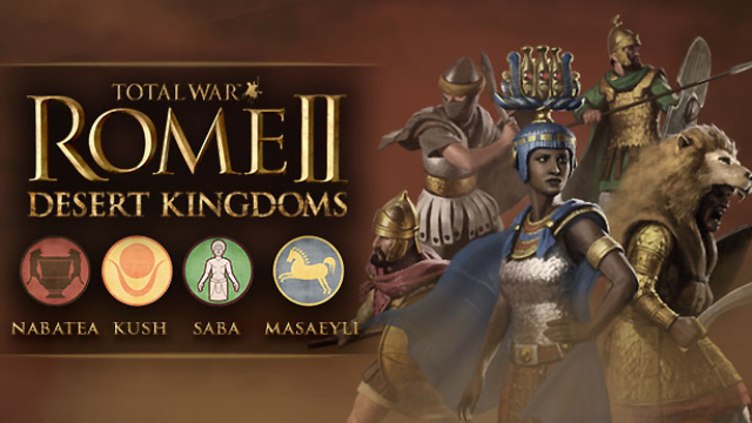

 . Đành ngồi chờ, tự sướng với xem các ty thoai


 ?
?
